



GLP Receptor
GLP Receptor
The GLP receptors contain two family members, GLP-1 receptor (GLP1R, or GLP-1R) and GLP-2 receptor (GLP2R or GLP-1R), activated by the glucagon-like peptides (GLPs). GLPs are s secreted by intestinal cells; causes insulin release; inhibits glucagon secretion, appetite, and energy intake; and delays gastric emptying because GLP receptors are located on the gut, pancreas, brainstem, hypothalamus, and vagal-afferent nerves. GLP-1 has only one known receptor, GLP1R, and regulates gut motility, appetite, islet function, and glucose homeostasis, whereas GLP-2, the agonist of GLP2R, enhances intestinal nutrient absorption. GLP-1R agonists are used to treat diabetes and obesity, and a GLP-2R agonist is approved to treat short bowel syndrome. An investigation of the actions of GLP receptor activation on gallbladder motility has demonstrated that GLP-2 receptor activation increases gallbladder volume in vivo and decreases spontaneous activity in GBSM bundles ex vivo. Like the inhibitory transmitters, which elicit their actions via an adenylate cyclase-protein kinase A-KATP channel pathway, the GLP-2 receptor signals through this same pathway.
All Product Categories
-
GLP Receptor Inhibitors
(17)
View all products
-
GLP Receptor Agonists
(149)
View all products
-
GLP Receptor Antagonists
(9)
View all products
-
GLP Receptor Activators
(14)
View all products
-
GLP Receptor Modulators
(8)
View all products
-
GLP Receptor Inducer
(1)
View all products
-
GLP Receptor Degrader
(1)
View all products
-
GLP Receptor Controls
(2)
View all products
-
GLP Receptor Ligands
(2)
View all products
-
GLP Receptor Related Products (233)
Related Products (233)

-
Antibodies (1)
-
Semaglutide
 0 ImagesSemaglutide is a long-acting, selective, competitive GLP-1R agonist that can penetrate the blood-brain barrier. After activating GLP-1R, Semaglutide promotes insulin secretion, inhibits gastric emptying and appetite, and at the same time enhances autophagy, inhibits oxidative stress and apoptosis. Semaglutide also regulates mitochondrial function and lipid metabolism (such as reducing de novo lipogenesis in the liver). Semaglutide has activities such as lowering blood sugar, reducing weight, neuroprotection (such as improving motor function in Parkinson's disease models, reducing α-synuclein aggregation) and improving hepatic steatosis. Semaglutide can be used for the study of neurodegenerative diseases and liver diseases such as type 2 diabetes, obesity, Parkinson's disease, metabolic associated fatty liver disease (MASLD), and cancer.
-
Exendin-4
 0 ImagesSynonyms: ExenatideExendin‑4 (Exenatide) is an orally active, blood-brain barrier-permeable glucagon-like peptide-1 receptor (GLP‑1 receptor) agonist that resists degradation mediated by dipeptidyl peptidase IV. Exendin‑4 mediates multiple glucose-regulating effects, including stimulation of glucose-dependent insulin secretion, inhibition of glucagon production, increase in β-cell mass, delay of gastric emptying, reduction of food intake, improvement of peripheral insulin sensitivity, and restoration of normal islet structure. Exendin‑4 inhibits oxidative stress, alleviates inflammatory responses, and reduces neuronal apoptosis. Exendin‑4 reduces the aggregation level of mutant huntingtin, improves motor function, prolongs survival time, and regulates the expression levels of leptin and ghrelin. Exendin‑4 can be used in research related to type 2 diabetes, acute ischemic stroke, and Huntington's disease.
-
Liraglutide
 0 ImagesLiraglutide is a glucagon-like peptide-1 (GLP-1) receptor agonist used clinically to treat type 2 diabetes mellitus.
-
Retatrutide
 0 ImagesSynonyms: LY3437943Retatrutide (LY3437943) is a triple agonist peptide of the glucagon receptor (GCGR), glucosedependent insulinotropic polypeptide receptor (GIPR), and glucagon-like peptide-1 receptor (GLP-1R). Retatrutide binds human GCGR, GIPR, and GLP-1R with EC50 values of 5.79, 0.0643 and 0.775 nM, respectively. Retatrutide can be used for the research of obesity.
-
Exendin(9-39) amide
 0 ImagesSynonyms: AvexitideExendin (9-39) amide (Avexitide) is a competitive GLP-1R antagonist. Exendin (9-39) amide blocks the Semaglutide (HY-114118)-induced increase in insulin secretion and also attenuates the hypoglycemic effect of Semaglutide. Exendin (9-39) amide abolishes the islet-protective effect of Liraglutide. Exendin (9-39) amide can be used in research on type 2 diabetes and type 1 diabetes.
-
Maridebart cafraglutide
 0 ImagesCat. No.: HY-164535CAS No.: 2887445-76-1Synonyms: AMG 133Maridebart cafraglutide (AMG 133) is a long-acting peptide-antibody conjugate that combines GLP-1 receptor agonist with glucose-dependent insulinotropic polypeptide (GIP) receptor antagonism. Maridebart cafraglutide shows antagonist activity against human, cynomolgus monkey and rat GIPR with IC50 values of 46.4 nM, 26.5 nM, 822.3 nM, respectively. Maridebart cafraglutide shows agonist activity against human, cynomolgus monkey, rat and mouse GLP-1R with EC50 values of 24.4 pM, 5.7 pM, 2.4 pM and 123 pM, respectively. Maridebart cafraglutide can be used for the study of obesity and type 2 diabetes.
-
Sitagliptin
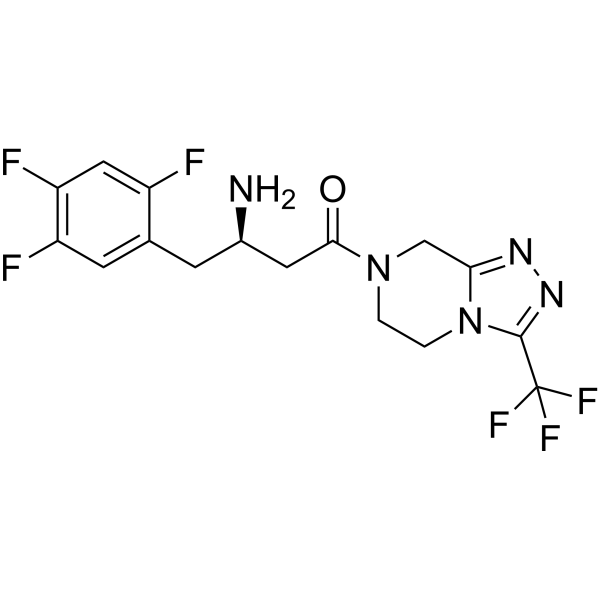 0 ImagesSynonyms: MK-0431Sitagliptin (MK-0431) is an orally active and highly selective DPP4 inhibitor with an IC50 value of 19 nM. Sitagliptin blocks the degradation of glucagon-like peptide-1 (GLP-1) and glucose-dependent insulinotropic peptide (GIP) by competing inhibition mechanism (Kᵢ = 1 nM), thereby increasing the level of active incretin. Sitagliptin can also directly stimulate the secretion of GLP-1 by intestinal L cells by activating the cAMP/PKA and ERK1/2 pathways, and this effect is independent of DPP-4. Sitagliptin shows protective effects on pancreatic islet grafts in 1-type diabetes models. Sitagliptin can be used for the study of 1-type and 2-type diabetes.
-
Mazdutide
 0 ImagesSynonyms: IBI-362; LY-3305677; OXM-3Mazdutide (IBI-362; LY-3305677) is a long-acting synthetic oxyntomodulin analog. Mazdutide is also a co-agonist of glucagon-like peptide (GLP-1R) and glucagon receptor (GCGR). Mazdutide binds human and mouse GCGR (Ki: 17.7 nM and 15.9 nM, respectively) and GLP-1R (Ki: 28.6 nM and 25.1 nM, respectively) and stimulates insulin secretion from mouse islets (EC50: 5.2 nM). Mazdutide is used in studies of obesity and type 2 diabetes (T2D).
-
Semaglutide TFA
 0 ImagesCat. No.: HY-114118APurity: 99.74%Semaglutide TFA is a long-acting, selective, competitive GLP-1R agonist that can penetrate the blood-brain barrier. After activating GLP-1R, Semaglutide TFA promotes insulin secretion, inhibits gastric emptying and appetite, and at the same time enhances autophagy, inhibits oxidative stress and apoptosis. Semaglutide TFA also regulates mitochondrial function and lipid metabolism (such as reducing de novo lipogenesis in the liver). Semaglutide TFA has activities such as lowering blood sugar, reducing weight, neuroprotection (such as improving motor function in Parkinson's disease models, reducing α-synuclein aggregation) and improving hepatic steatosis. Semaglutide TFA can be used for the study of neurodegenerative diseases and liver diseases such as type 2 diabetes, obesity, Parkinson's disease, metabolic associated fatty liver disease (MASLD), and cancer.
-
Survodutide
 0 ImagesSynonyms: BI 456906Survodutide (BI 456906) is a potent, selective glucagon receptor/GLP-1 receptor (GCGR/GLP-1R) dual agonist with EC50s of 0.52 nM and 0.33 nM in CHO-K1 cells, respectively. Survodutide, a 29-amino-acid peptide, is a potent acylated peptide containing a C18 fatty acid. Survodutide has robust anti-obesity efficacy achieved by increasing energy expenditure and decreasing food intake.
-
Semaglutide acetate
 0 ImagesSemaglutide acetate is a long-acting, selective, competitive GLP-1R agonist that can penetrate the blood-brain barrier. After activating GLP-1R, Semaglutide acetate promotes insulin secretion, inhibits gastric emptying and appetite, and at the same time enhances autophagy, inhibits oxidative stress and apoptosis. Semaglutide acetate also regulates mitochondrial function and lipid metabolism (such as reducing de novo lipogenesis in the liver). Semaglutide acetate has activities such as lowering blood sugar, reducing weight, neuroprotection (such as improving motor function in Parkinson's disease models, reducing α-synuclein aggregation) and improving hepatic steatosis. Semaglutide acetate can be used for the study of neurodegenerative diseases and liver diseases such as type 2 diabetes, obesity, Parkinson's disease, metabolic associated fatty liver disease (MASLD), and cancer.
-
Sitagliptin phosphate
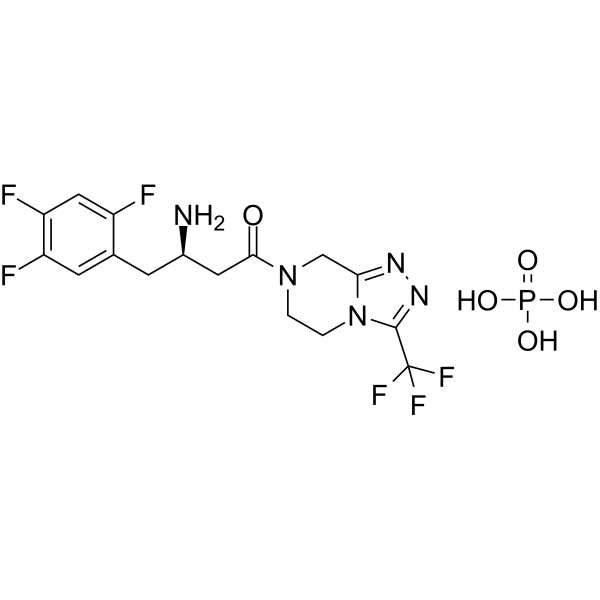 0 ImagesSynonyms: MK-0431 phosphateSitagliptin (MK-0431) phosphate is an orally active and highly selective DPP4 inhibitor with an IC50 value of 19 nM. Sitagliptin phosphate blocks the degradation of glucagon-like peptide-1 (GLP-1) and glucose-dependent insulinotropic peptide (GIP) by competing inhibition mechanism (Kᵢ = 1 nM), thereby increasing the level of active incretin. Sitagliptin phosphate can also directly stimulate the secretion of GLP-1 by intestinal L cells by activating the cAMP/PKA and ERK1/2 pathways, and this effect is independent of DPP-4. Sitagliptin phosphate shows protective effects on pancreatic islet grafts in 1-type diabetes models. Sitagliptin phosphate can be used for the study of 1-type and 2-type diabetes.
-
Lixisenatide
 0 ImagesLixisenatide is a glucagon-like peptide-1 (GLP-1) receptor agonist. Lixisenatide inhibits the inflammatory response through down regulation of pro-inflammatory cytokines, and suppresses of the Akt-MEK1/2 signaling pathway. Lixisenatide can inhibit oxidative stress, mitochondrial dysfunction and apoptosis. Lixisenatide can be used for the researches of inflammation, metabolic disease, neurological disease and cardiovascular disease, such as rheumatoid arthritis, diabetes, Alzheimer's disease and atherosclerosis.
-
Retatrutide TFA
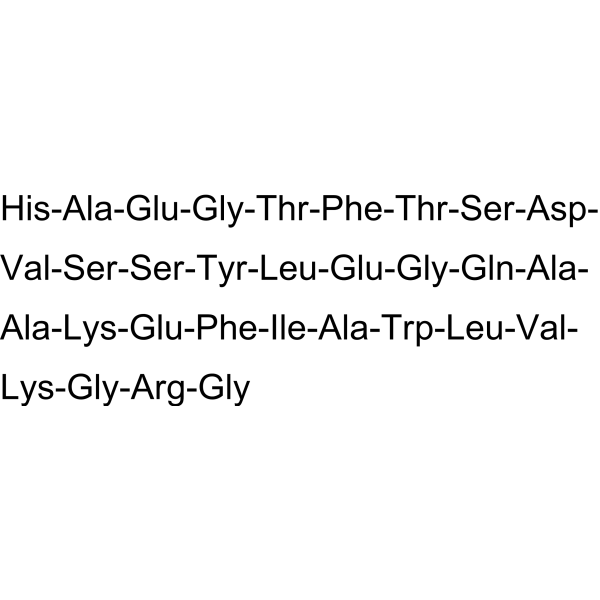
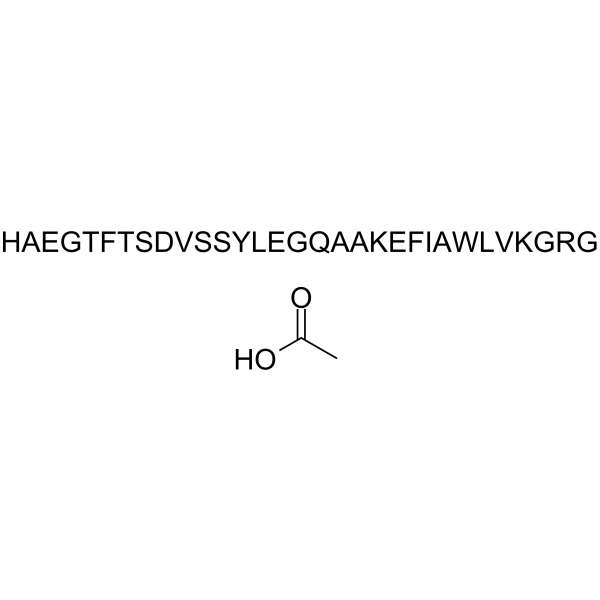
 0 ImagesCat. No.: HY-P3506APurity: 99.84%Synonyms: LY3437943 TFARetatrutide (LY3437943) TFA is a triple agonist peptide of the glucagon receptor (GCGR), glucosedependent insulinotropic polypeptide receptor (GIPR), and glucagon-like peptide-1 receptor (GLP-1R). Retatrutide TFA binds human GCGR, GIPR, and GLP-1R with EC50 values of 5.79, 0.0643 and 0.775 nM, respectively. Retatrutide TFA can be used for the research of obesity.
-
Lotiglipron
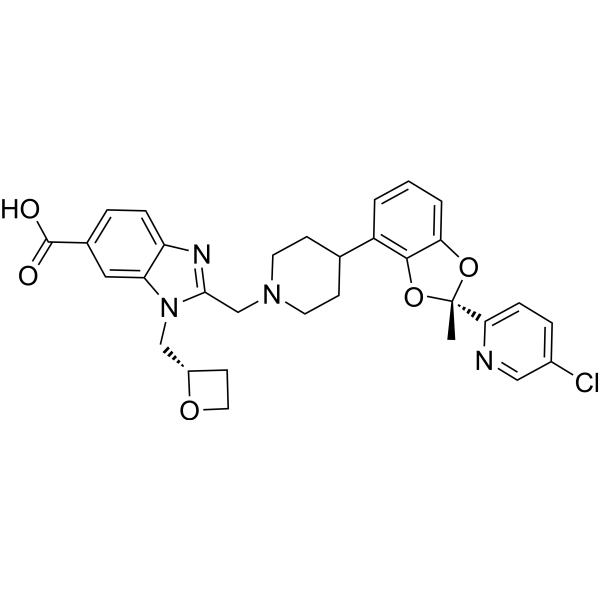 0 ImagesSynonyms: PF-07081532Lotiglipron (PF-07081532) is an orally active GLP-1R agonist. Lotiglipron reduces glucose and body weight, and can be used for research of Type 2 diabetes mellitus (T2DM).
-
Maridebart
 0 ImagesSynonyms: AMG133 antibodyMaridebart (AMG133 antibody) is a human immunoglobulin G1-kappa, anti-GIPR (gastric inhibitory polypeptide receptor) monoclonal antibody. Maridebart is the antibody portion of Maridebart cafraglutide (HY-164535) and can be used for the synthesis of antibody-drug conjugates (ADC). Maridebart can be used for the reserrch of obesity and type 2 diabetes .
-
Exendin-4 acetate
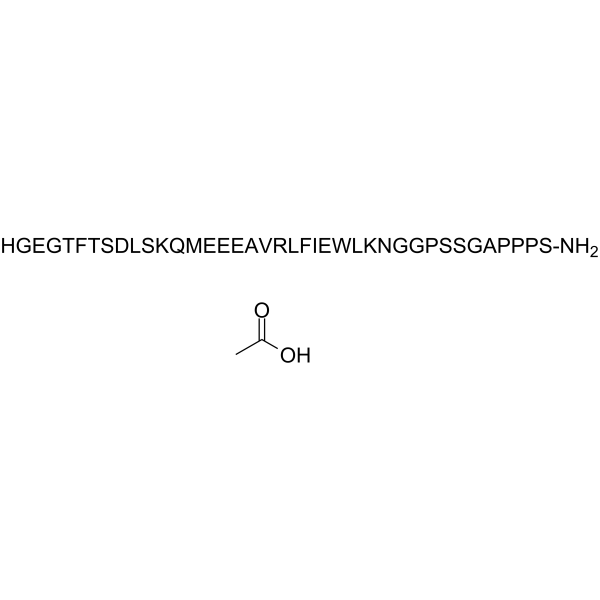 0 ImagesSynonyms: Exenatide acetateExendin-4 acetate (Exenatide acetate) is an orally active, blood-brain barrier-permeable glucagon-like peptide-1 receptor (GLP‑1 receptor) agonist that resists degradation mediated by dipeptidyl peptidase IV. Exendin-4 acetate mediates multiple glucose-regulating effects, including stimulation of glucose-dependent insulin secretion, inhibition of glucagon production, increase in β-cell mass, delay of gastric emptying, reduction of food intake, improvement of peripheral insulin sensitivity, and restoration of normal islet structure. Exendin-4 acetate inhibits oxidative stress, alleviates inflammatory responses, and reduces neuronal apoptosis. Exendin-4 acetate reduces the aggregation level of mutant huntingtin, improves motor function, prolongs survival time, and regulates the expression levels of leptin and ghrelin. Exendin-4 acetate can be used in research related to type 2 diabetes, acute ischemic stroke, and Huntington's disease.
-
Apraglutide
 0 ImagesSynonyms: FE 203799Apraglutide (FE 203799), a synthetic 33-amino-acid peptide and a long-acting GLP-2 analogue, enhances adaptation and linear intestinal growth in a neonatal piglet model of short bowel syndrome with total resection of the ileum.




